









Michigan vs. Michigan State
University of Michigan Ann Arbor and Michigan State University side by side on admissions, cost, and outcomes, from public data.
At a glance
- Harder to get into: Michigan (15.6% admitted vs 84.8%). Typical SAT 1450 vs 1270.
- Cheaper after aid: Michigan. Average net price is $17,574 vs $23,657 at Michigan State.
- Graduation: Michigan 90% vs Michigan State 77%.
- Earnings 10 years out: Michigan $74,400 vs Michigan State $60,000 (median).
Sources: IPEDS and College Scorecard.
Admission calculator
PartnerNot sure you'd get in? Check your chances at Michigan and Michigan State with Appily's free admission calculator.
-
Admissions
- Admission chances
-
Michigan My Chances
-
Michigan State My Chances
-
-
- Applied
-
Michigan 98,310
-
Michigan State 62,138
-
-
- Admitted
-
Michigan 15,373
-
Michigan State 52,690
-
-
- Acceptance rate
-
Michigan 15.6%
-
Michigan State 84.8%
-
-
- Yield (share of admitted who enroll)
-
Michigan 47.3%
-
Michigan State 18.3%
-
-
- Typical SAT score
-
Michigan 1450
-
Michigan State 1270
-
-
- Typical ACT score
-
Michigan 32
-
Michigan State 28
-
-
- Average high school GPA
-
Michigan 3.88
-
Michigan State 3.72
-
-
- Typical high school grades
-
Michigan A
-
Michigan State A-
-
-
- Admissions standards
-
Michigan Exceptional
-
Michigan State Difficult
-
-
- Applicant competition
-
Michigan Very High
-
Michigan State
-
-
- SAT range
-
Michigan 1360-1530
-
Michigan State 1180-1360
-
-
- ACT range
-
Michigan 31-34
-
Michigan State 25-31
-
-
- Submit test scores
-
Michigan Test optional
-
Michigan State Test optional
-
-
- Application deadline
-
Michigan Feb 1, 2027
-
Michigan State
-
-
-
Cost
- Tuition (in state)
-
Michigan $17,736
-
Michigan State $16,458
-
-
- Tuition (out of state)
-
Michigan $60,946
-
Michigan State $43,842
-
-
- Room & board
-
Michigan $15,328
-
Michigan State $12,564
-
-
- Average net price
-
Michigan $17,574
-
Michigan State $23,657
-
-
- Average grant aid
-
Michigan $25,099
-
Michigan State $9,750
-
-
- % receiving grant aid
-
Michigan 59%
-
Michigan State 88%
-
-
-
Outcomes
- Graduation rate
-
Michigan 90%
-
Michigan State 77%
-
-
- Median earnings (after 10 years)
-
Michigan $74,400
-
Michigan State $60,000
-
-
- Making student loan payments
-
Michigan 78%
-
Michigan State 68%
-
-
- Median student loan debt
-
Michigan $20,103
-
Michigan State $25,484
-
-
- Median loan payment
-
Michigan $207
-
Michigan State $263
-
-
-
Academics
- Student to faculty ratio
-
Michigan 11:1
-
Michigan State 17:1
-
-
- Popular majors
-
Michigan
- Social Sciences (17%)
- Engineering (15%)
- Psychology (11%)
- Biology (8%)
- Visual and Performing Arts (6%)
-
Michigan State
- Business (17%)
- Social Sciences (11%)
- Communication (11%)
- Biology (9%)
- Health Professions (6%)
-
-
-
School basics
- School
- Michigan University of Michigan Ann Arbor
- Michigan State Michigan State University
- Location
-
Michigan Ann Arbor, MI
-
Michigan State East Lansing, MI
-
-
- Setting
-
Michigan Midsize City
-
Michigan State Rural Fringe
-
-
- Total enrollment
-
Michigan 52,855
-
Michigan State 52,089
-
-
- Type
-
Michigan Public 4 Year
-
Michigan State Public 4 Year
-
-
- National ranking
-
Michigan #48
-
Michigan State #241
-
-
Comparable Facts
Compare University of Michigan Ann Arbor in Ann Arbor, MI with Michigan State University in East Lansing, MI on tuition, admissions, graduation, earnings, and student body data using the tables above.
University of Michigan Ann Arbor is larger than Michigan State based on total student enrollment (52,855 students vs. 52,089 students).
Location, institution type, and student-faculty ratio
- University of Michigan Ann Arbor is located in Ann Arbor, MI (Midsize City setting); Michigan State University is in East Lansing, MI (Rural Fringe setting).
- University of Michigan Ann Arbor is a public, non-profit 4-year institution. Michigan State University is a public, non-profit 4-year institution.
- Student-to-faculty ratio: University of Michigan Ann Arbor 11:1; Michigan State University 17:1.
Cost details
- Living costs (room and board or off-campus housing budget) at Michigan State University are 18% lower than at University of Michigan Ann Arbor ($12,564 vs. $15,328).
- Out-of-state tuition is 39% higher at Michigan than at Michigan State University (about $17,104 more per year; $60,946 vs. $43,842).
- A larger share of students receive grant aid at Michigan State University than at University of Michigan Ann Arbor (88% vs. 59%).
- The average total grant financial aid received by University of Michigan Ann Arbor students is 157.4% larger than aid received by Michigan State University students ($25,099 vs. $9,750).
Admissions details
- Typical ACT composite is 4 points higher at Michigan than at Michigan State (32 vs. 28, midpoint estimate).
- SAT or ACT scores are test optional at both Michigan and Michigan State.
- Typical fall application deadline: Michigan Feb 1, 2027.
- Enrolled first-year students at Michigan average a 3.88 high school GPA, 0.16 higher than at Michigan State (3.72).
- The share of admitted students who enrolled (yield) is 47.3% at Michigan vs. 18.3% at Michigan State.
Loans and repayment
- Among federal student loan borrowers, University of Michigan Ann Arbor graduates have a $5,381 lower median loan debt than Michigan State graduates ($20,103 vs. $25,484).
- Among borrowers, Michigan graduates have an estimated $56 lower median monthly federal student loan payment than Michigan State graduates ($207 vs. $263).
- More Michigan graduates are actively paying back their federal student loan debt than former Michigan State students, three years after graduation (78% vs. 68%).
Sources: U.S. Department of Education, IPEDS and College Scorecard. Values reflect the most recent year available in our dataset.
Change schools
You can add up to two more colleges. Each one gets its own column.
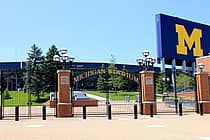 University of Michigan Ann Arbor
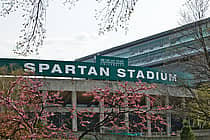 Michigan State University